2026-09-13 ·
Removing Mud and Debris After a Flooded Basement Cleanup in Minnesota
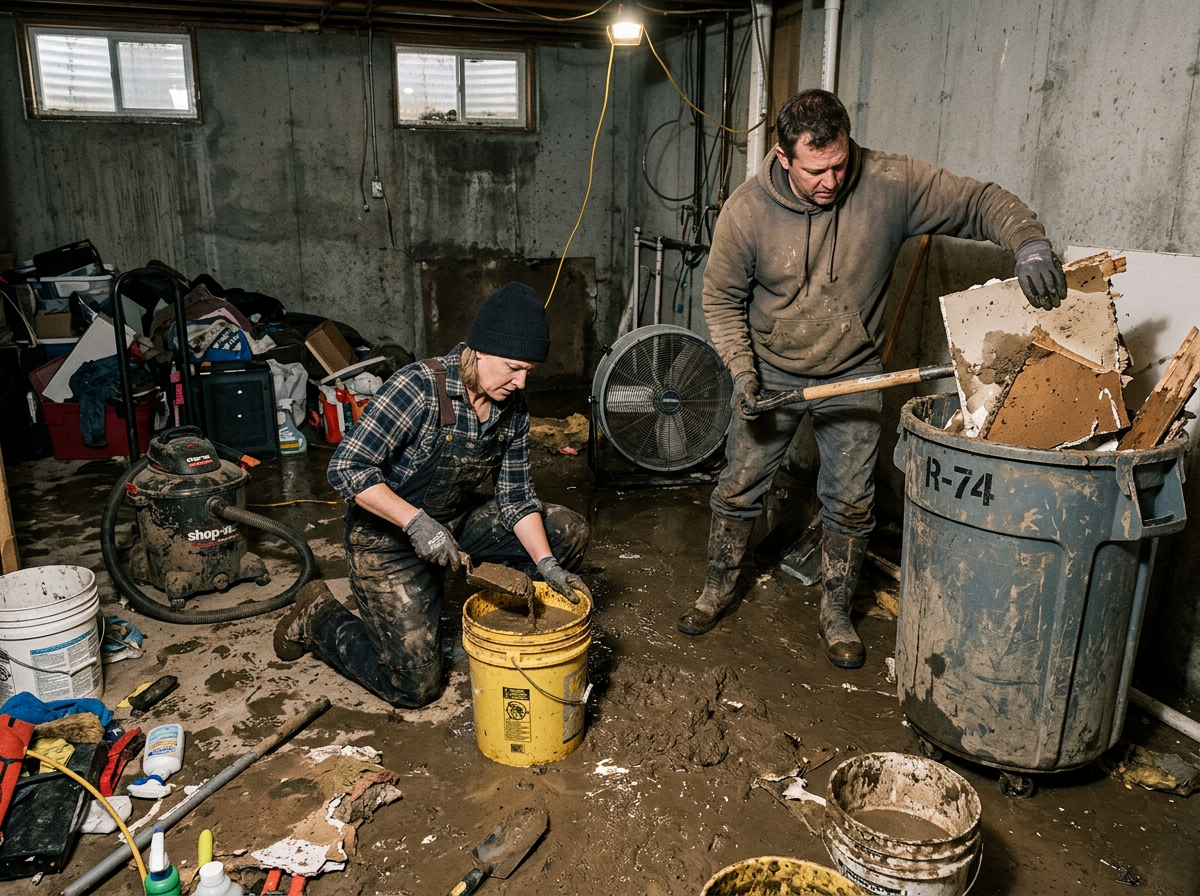
In Minnesota, removing mud and debris after a flooded basement starts with pumping out any remaining water, then manually clearing the sediment that settles on floors and against walls, a process that often requires 1-3 days before drying equipment can run effectively. The 42-60 inch frost depth keeps ground frozen while meltwater or combined sewer flows push mud indoors, especially in finished basements common across the Twin Cities. Crews begin at the lowest point, working outward to avoid spreading contamination. Winter conditions extend the timeline because cold air holds less moisture and ventilation is limited. Homeowners should wear protective gear and isolate the space to prevent tracking material upstairs.
Initial Safety Steps and Assessment
Before any mud removal, confirm power is off to affected outlets and check for structural concerns created by saturated soil pressing against foundation walls. In areas like Osseo and surrounding suburbs, finished basements mean drywall, carpet, and cabinetry often trap debris behind or beneath them. Document visible mud lines on walls with photos for later reference. Wear N95 masks, gloves, and boots rated for wet environments. If the water came through floor drains during heavy spring runoff, treat the material as potentially contaminated and avoid direct contact. This assessment phase prevents injuries and guides how much material needs extraction before flooded basement cleanup can transition to drying.
Clearing Standing Water and Loose Sediment
Once safety is confirmed, remove free water with submersible pumps rated for 1-2 inch solids so mud does not clog equipment. After the water drops below one inch, switch to wet vacuums to pull remaining slurry from low spots. In urban core neighborhoods with combined sewers, this step often reveals sewage mixed with mud, requiring extra containment. Work in sections, starting farthest from the exit point, and deposit material into heavy-duty bags or lined bins for later disposal. Frozen sump discharge lines can complicate outflow, so crews sometimes route hoses to heated areas or use multiple smaller pumps. This phase typically precedes full debris removal and sets the stage for the heavier shoveling work that follows.
Shoveling and Surface Cleaning of Mud
With water gone, use flat shovels and squeegees to lift the remaining mud layer, which commonly reaches 2-4 inches on concrete floors after melt events over still-frozen ground. In finished spaces, baseboards and lower drywall must be cut away to reach trapped sediment behind them. Scrub surfaces with stiff brushes and a detergent solution, then rinse with minimal water so new mud does not form. Pay special attention to expansion joints and around columns where debris collects. When the source involves sewage backup, double-bag all removed material and label it for landfill disposal rather than regular trash. This hands-on removal prevents odors and mold once drying begins, especially important when indoor humidity targets must stay below 60 percent during cold months.
Drying and Disposal Considerations
After mud removal, focus shifts to drying the remaining structure, which takes longer in winter because outside air is too cold for effective ventilation. Equipment such as air movers and dehumidifiers must run continuously, often for 5-10 days depending on how deeply moisture penetrated subfloors. Dispose of bagged mud and debris through licensed waste handlers rather than household pickup. Homeowners in lake-belt areas or the Anoka sand plain may see recurring water tables that keep basements damp longer. Check local ordinances in places like Maple Grove or Brooklyn Park for disposal rules. For guidance on continuing the drying process, see drying out carpet and subfloors after basement flooding in Brooklyn Park.
Reducing Future Mud Entry
Once the space is clear, consider installing or inspecting backwater valves on main sewer lines to block reverse flow during heavy rain or spring melt. In Wright County clay soils or areas with high water tables, grading around the foundation and extending downspouts can reduce surface water entry. Keep sump discharge lines clear of ice by using heated tape or rerouting during cold snaps. Regular checks on these systems, especially before seasonal rains, help limit the amount of mud that enters during the next event. Twin Cities Flood Response at 101 Broadway St W #114, Osseo, MN 55369 can provide site-specific observations during an initial visit. Review your policy details with your carrier, as coverage for sewer-related mud depends on the specific terms.