2026-09-13 ·
Drying Out Carpet and Subfloors After Basement Flooding in Brooklyn Park
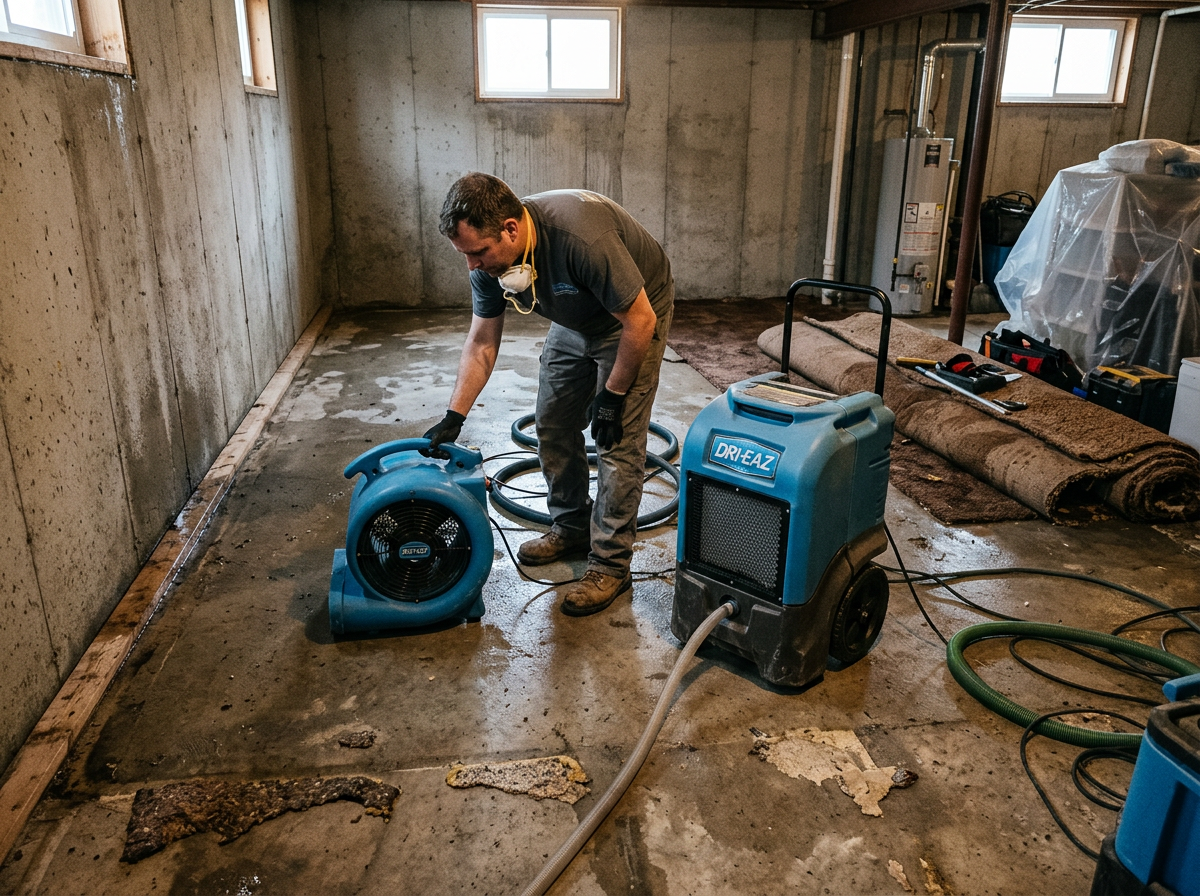
Drying carpet and subfloors after basement flooding in Brooklyn Park often requires 7 to 21 days when winter temperatures keep the ground frozen at 42-60 inch frost depth and limit natural ventilation. The process starts with prompt water removal to prevent saturation from reaching the plywood or particleboard layers beneath finished floors common in Twin Cities homes. Brooklyn Park properties near the Anoka sand plain or Wright County clay areas face added challenges from rising water tables that prolong moisture retention in lower levels.
Initial Water Removal Steps
Remove standing water first using pumps or wet vacuums before any drying equipment is placed. In Brooklyn Park, spring meltwater over still-frozen ground or combined sewer backups frequently push water through floor drains, requiring immediate extraction to limit how far moisture travels into carpet fibers and subfloor seams. Once visible water is gone, fans and dehumidifiers can begin moving air across surfaces, though winter conditions mean indoor drying must rely entirely on mechanical equipment rather than open windows. Homeowners should check for backwater valves during this phase because retrofitted valves in urban core homes can reduce repeat flooding events. Professional teams address these variables by monitoring moisture meters at multiple depths in the subfloor to confirm extraction has reached trapped pockets.
Dealing with Carpet and Underlayment
Carpet and padding in flooded Brooklyn Park basements are usually removed when water has wicked more than a few inches from the edges because trapped moisture under foam backing leads to rapid odor and staining. Lift sections carefully to inspect the concrete slab or wood subfloor beneath, noting that finished basements throughout the area often have glued-down carpet that tears during removal. Padding absorbs and holds water longer than carpet itself, so discarding saturated underlayment prevents it from re-wetting the floor above. Once carpet is out, the exposed surface can receive direct airflow from air movers positioned at low angles. This step also reveals any sewage residue from urban backups, which requires separate handling before drying continues.
Addressing Subfloor Moisture
Subfloors in Brooklyn Park homes demand targeted drying because particleboard swells permanently once it exceeds certain moisture content and plywood delaminates along edges near exterior walls. Place moisture meters at the center and perimeter of each room to track progress, since clay soils in nearby Wright County hold water against foundations longer than sandier Anoka areas. In winter, frozen sump discharge lines or ice dams can allow continued seepage, so addressing the source remains essential while drying equipment runs. Air movers directed under any remaining cabinetry or along baseboards help pull moisture from hidden joints. Consistent readings below 15 percent moisture content typically signal the subfloor is ready for new coverings.
Winter-Specific Drying Challenges in Brooklyn Park
Winter drying in Brooklyn Park basements stretches longer because outdoor temperatures prevent ventilation and indoor humidity stays elevated without mechanical help. Frozen ground at 42-60 inch depth blocks natural drainage, so water from ice dams or pipe bursts sits against foundations and re-enters through cracks. Lake-belt water tables around the metro add hydrostatic pressure that keeps slabs damp even after surface water is gone. Dehumidifiers must run continuously with drainage hoses routed to floor drains or exterior locations to maintain progress. Homeowners often notice slower evaporation when daytime highs stay below freezing, requiring equipment to operate for additional days compared with summer floods.
Ongoing Monitoring and When to Seek Help
Check moisture levels daily with a meter and watch for musty odors or visible mold on baseboards as signs that drying has stalled. Flooded basement cleanup teams bring industrial equipment sized for larger volumes and can adjust placement as readings change. When carpet or subfloor sections remain wet after several days of consistent effort, basement water removal specialists evaluate whether hidden cavities under stairs or behind finished walls need attention. Readers facing repeated winter events may also review winter pipe bursts and flooded basement cleanup in Twin Cities homes for prevention ideas. Contact Twin Cities Flood Response at 101 Broadway St W #114, Osseo, MN 55369 for on-site assessment when readings do not drop steadily.