
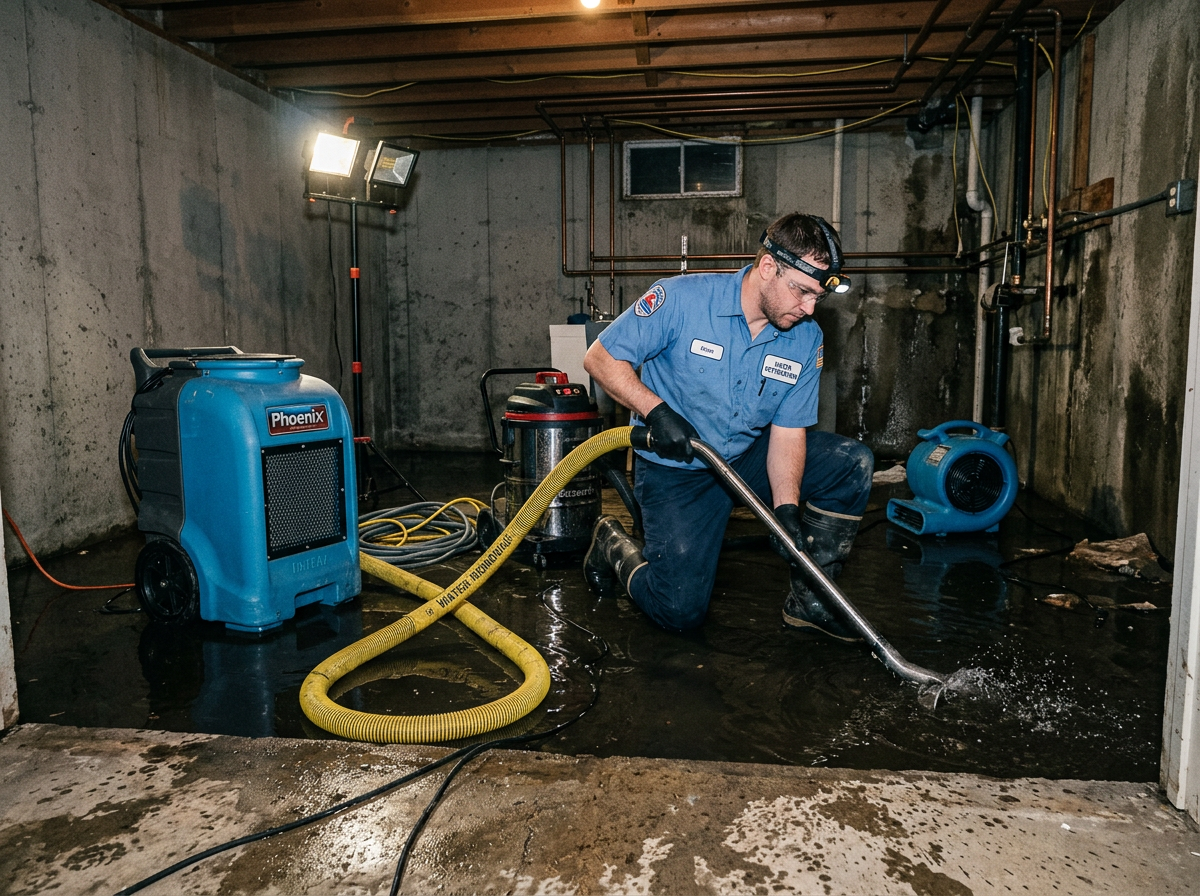
Faribault's mix of 19th-century stone foundations and mid-century basements sits along the Cannon River corridor, where spring rise and clay soils create predictable water entry points. Access from the north stays reliable via I-35 and US-14, allowing crews to reach both downtown blocks and outlying neighborhoods without long detours.
Seasonal patterns here center on rapid snowmelt and river influence rather than lake seepage, so drying plans focus on stone walls and slab edges common to Rice County stock.
Below is what Faribault customers get when they book basement water removal with us — local dispatch, and the exact process we use across Minnesota.
In Minnesota housing stock with finished basements, water enters through three main paths: spring snowmelt sheeting over 42-60 inches of frost into foundations, combined sewers in Minneapolis and Saint Paul cores forcing sewage up floor drains, and sump pumps that fail when discharge lines freeze or power drops during storms. Finished spaces with carpet, drywall, and cabinetry complicate extraction because water wicks into cavities quickly, turning Category 1 meltwater into mixed contamination once it contacts flooring adhesives or insulation. Technicians must map moisture in wall cavities and under slabs before deciding what can be dried in place versus what must be removed.
Pumping a flooded basement too fast creates real risk when outside soil remains saturated against the foundation wall. Rapid drawdown can let hydrostatic pressure push the wall inward, especially on Anoka sand plains or Hennepin lake-belt clay where water tables stay high. Extraction therefore follows a controlled sequence: remove standing water in stages, relieve pressure gradually, then move to air movers and dehumidifiers positioned for winter conditions where outdoor venting is limited by cold temperatures.
Basement Water Removal Services We Offer in Faribault
✓Standing Water Pump-Out
Removes bulk water from basements using staged pumping to avoid sudden pressure changes against saturated exterior soil.
✓Controlled Drawdown to Protect Foundation Walls
Lowers water levels incrementally so hydrostatic pressure does not collapse walls in frost-affected Minnesota soils.
✓Post-Extraction Drying
Places air movers and dehumidifiers for winter drying when outdoor air exchange is restricted by sub-zero temperatures.
✓Spring Snowmelt Seepage Response
Addresses water that sheets across frozen ground and enters through foundation cracks or window wells in March and April.
✓Sewer Backup Response
Handles Category 3 water forced upward through floor drains in older combined-sewer neighborhoods of Minneapolis and Saint Paul.
✓Sump Pump Failure Response
Manages flooding from frozen discharge lines or power loss that stops sump operation during storms.
How It Works in Faribault
- 1
Identify Entry Point and Water Category
Inspect for seepage, floor-drain surcharge, or sump failure and classify water to set containment and disposal rules.
- 2
Staged Extraction
Pump standing water in controlled increments while monitoring foundation walls for movement.
- 3
Moisture Mapping
Check wall cavities, under slabs, and finished surfaces to locate hidden water before drying begins.
- 4
Drying and Verification
Position equipment for winter conditions and confirm moisture levels before any reconstruction.
Serving All of Faribault
We regularly handle basement water removal jobs near:
- 📍Cathedral of Our Merciful Saviour
- 📍Faribault Woolen Mill
- 📍Rice County Fairgrounds
- 📍Downtown Faribault
Basement Water Removal Pricing in Faribault
Scope depends on water volume, contamination level, finished materials present, and whether walls or floors require opening; an on-site inspection determines the exact work required. Call for assessment.
Want the full picture of this service? See our Basement Water Removal page, or everything we do in Faribault, MN.