2026-09-13 ·
Grading and Drainage Fixes Around Foundations in Osseo
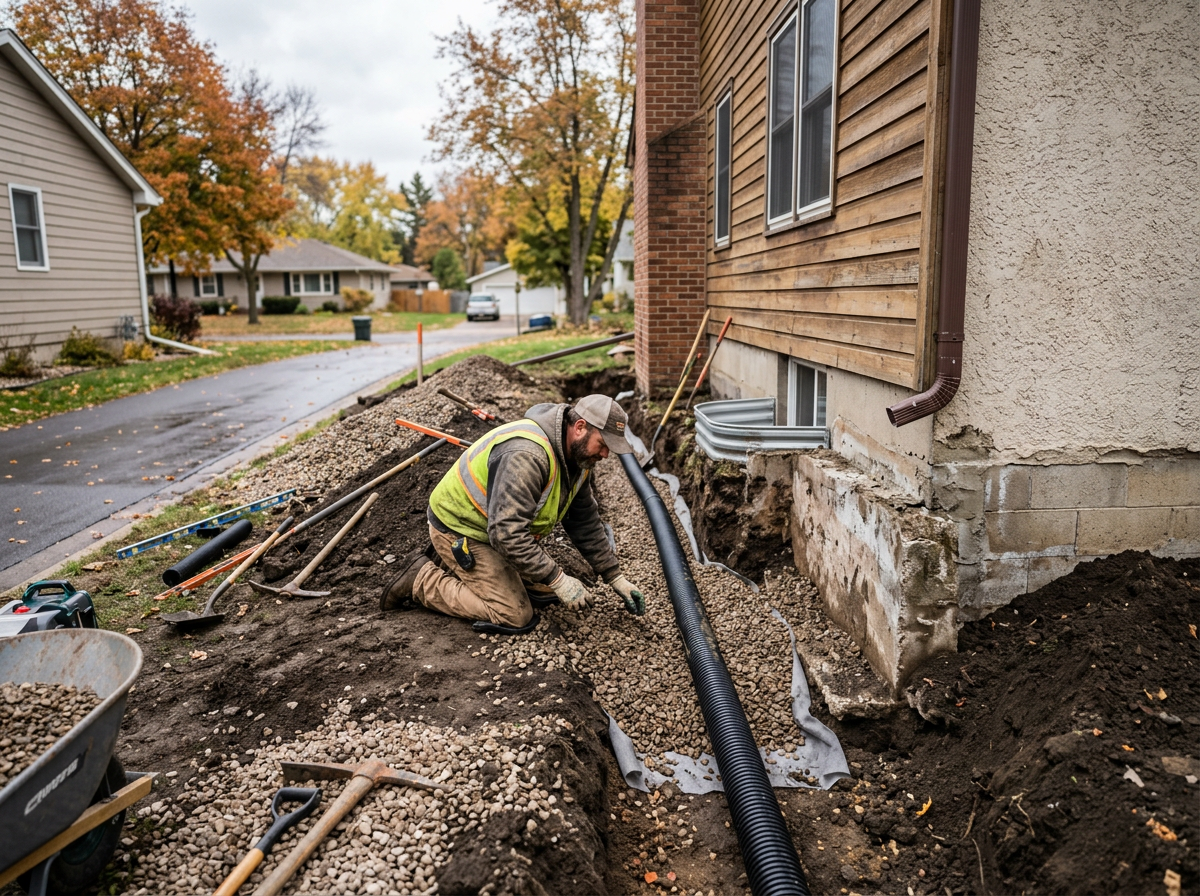
Proper grading around foundations in Osseo requires a consistent 6-inch drop over the first 10 feet away from the house, combined with clear swales or extensions that move water at least 5 feet beyond the backfill zone before it can pool against the wall. This slope prevents surface water from sitting against the foundation during spring melt when frozen ground blocks natural infiltration.
Reading Osseo Soil and Frost Patterns
Osseo sits on the edge of the Anoka sand plain where sandy soils drain quickly in summer yet still freeze solid to 42-60 inches by mid-winter. Clay pockets in nearby Wright County hold water longer, so the same 2-inch rain event that disappears overnight in sand can linger for days on clay. Homeowners notice the difference most in March when meltwater runs across still-frozen surfaces and finds every low spot next to the foundation. Checking soil type with a simple hand auger test at 24 inches helps decide whether a French drain or just re-grading will handle the volume. During winter, frozen sump discharge lines compound the problem because pumps cannot move water away until temperatures rise above freezing for several consecutive days.
Checking Current Grade Around the House
Walk the perimeter after a rain or during spring thaw and look for standing water within 6 feet of the wall or soil that slopes back toward the foundation. Measure the drop with a 10-foot board and level; anything less than 6 inches needs correction. Pay special attention to areas under decks or near downspout extensions that have settled over time. In Osseo neighborhoods with combined sewers, even modest surface ponding can push water toward floor drains once the ground thaws. Mark low spots with flags before starting work so the fix addresses the actual flow path rather than a guess.
Regrading and Adding Surface Drainage
Remove the top 8-12 inches of soil along the foundation and replace it with compacted fill that maintains the required slope. Extend downspouts at least 5 feet or connect them to solid pipe that carries water to a daylight outlet or dry well. Where space is tight, install a shallow swale lined with 3-4 inches of river rock to slow flow and reduce erosion. These steps keep water from reaching the 42-60 inch frost line zone where it can freeze and expand against the wall. Regrading also reduces the load on any existing sump system during the weeks when ventilation for drying is limited by cold temperatures.
Protecting Against Urban Sewer Backup
Many Osseo blocks still tie into combined sewers that surcharge during heavy spring rains. A backwater valve installed in the main sewer line or individual floor-drain backflow preventers stop sewage from rising into the basement even when surface grading is correct. Pair the valve with a sump pump that has a battery backup so power outages during storms do not leave the system unprotected. These mechanical fixes work together with surface grading to manage both overland flow and subsurface pressure common in the Twin Cities urban core.
Knowing When Professional Help Is Needed
If water still enters after regrading, or if the home sits in a known high water table area near the lake belt, consult a restoration contractor familiar with local conditions. Persistent moisture can lead to Flooded Basement Cleanup situations that require equipment sized for Minnesota winter drying times, which often stretch beyond the typical 3-5 days because outdoor ventilation is restricted. Review related guidance on Preventing Ice Dams That Lead to Ceiling Leaks and Basement Water in Osseo and Winter Pipe Bursts and Flooded Basement Cleanup in Twin Cities Homes for additional seasonal context. Twin Cities Flood Response at 101 Broadway St W #114, Osseo, MN 55369 can assess drainage patterns on site and coordinate with the homeowner's insurance carrier to determine coverage.