2026-09-13 ·
Choosing Equipment for Quick Flooded Basement Cleanup After July Storms
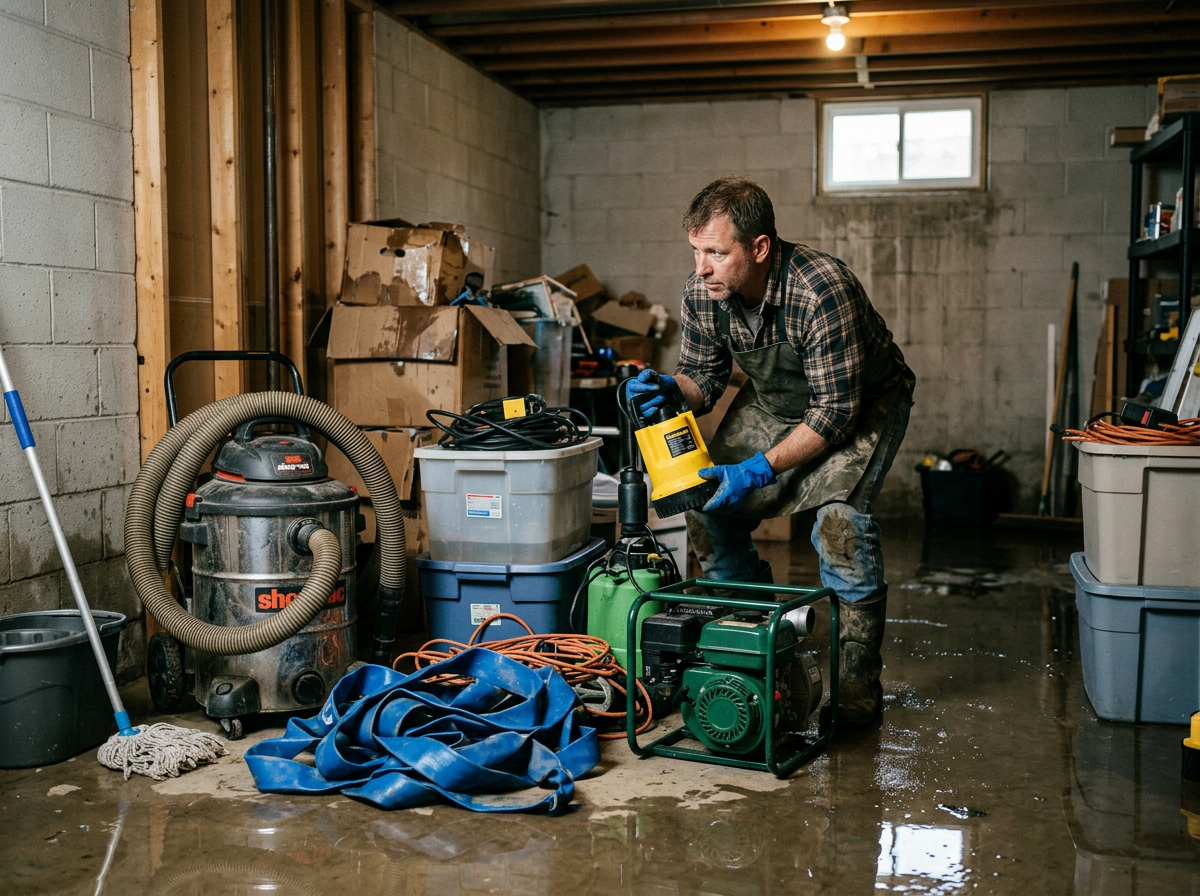
For quick flooded basement cleanup after July storms, start with high-volume submersible pumps rated at 10–15 gallons per minute paired with industrial dehumidifiers that hold 40–50 percent relative humidity and air movers delivering 3,000–5,000 cubic feet per minute per 1,000 square feet. These tools remove standing water within hours and keep moisture from migrating into finished walls and floors common in Twin Cities basements.
Water Extraction Equipment Choices
July thunderstorms often drop several inches of rain in a few hours, overwhelming floor drains in areas served by combined sewers. A 2-inch or 3-inch submersible pump clears the bulk of water before it soaks into Anoka sand plain or Wright County clay soils. Crews then switch to a carpet wand or squeegee attachment on a truck-mounted extractor to pull water from padding and subfloor. In finished basements this step must happen before water wicks up baseboards and into drywall. Operators monitor the process with a moisture meter to confirm readings drop below 15 percent before moving to drying. When sewage is present, the same extraction steps apply but require separate containment to avoid cross-contamination. Flooded basement cleanup services follow these exact sequences on every Osseo-area call.
Air Movement and Humidity Control
Once visible water is gone, evaporation becomes the limiting factor. Minnesota basements retain humidity because they sit below grade and lack good ventilation in summer. Placing one air mover every 10–12 linear feet along walls and directing airflow across wet surfaces accelerates drying. Pair these with commercial dehumidifiers that remove 70–100 pints per day and maintain indoor relative humidity between 40 and 50 percent. In July temperatures of 75–85 degrees Fahrenheit, this combination typically brings a basement to a dry standard in 3–5 days. Technicians check that sump discharge lines remain clear so new rain does not re-wet the space. Over-drying below 35 percent can crack wood trim, so digital hygrometers guide adjustments throughout the process.
Moisture Monitoring and Documentation Tools
Infrared cameras and pin-type meters reveal hidden moisture behind finished walls that July storm water often reaches. Daily readings logged at the same locations track progress and prevent secondary mold growth. When homeowners need to file claims, these records support the required documentation. Documenting damage for insurance after Osseo basement flooding explains how to organize meter logs and photos for carriers. Crews also photograph each piece of equipment in place so the timeline of drying is clear. This data-driven approach replaces guesswork and shortens the overall restoration window.
Containment and Safety Gear for Summer Floods
July water frequently carries lawn chemicals and sediment from the lake-belt water table. Plastic sheeting and negative-air machines isolate the work area so dust and odors stay out of living spaces. Rubber boots, gloves, and half-face respirators protect technicians when floor-drain backups occur. After extraction, all tools are rinsed and dried on site to avoid transporting moisture to the next job. These steps keep the cleanup contained and the home usable while drying continues.
When to Add Professional Basement Water Removal
Homeowners who attempt cleanup with shop vacuums and box fans often find moisture lingers in slab joints and under cabinets. Professional basement water removal teams bring equipment sized for the volume of water and the square footage involved. In Osseo homes near Elm Creek, crews have seen water tables rise quickly after a single storm, requiring larger dehumidifiers and longer run times. The same crews return daily to adjust placement until readings stabilize. Homeowners who want to verify the work can request to inspect equipment logs and moisture charts before final walkthrough.